Credit Cards: Use Them, Don’t Be Used By Them
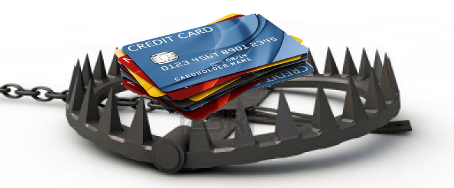 As most people know, credit cards are one of the simplest ways to build credit which then allows us to qualify for a home loan, business loan or even certain jobs. Having a few credit cards for a few years in perfect standing makes us look credit-worthy to banks and lenders. Some jobs use credit history to judge a person’s level of responsibility. So if we need to build credit history, credit cards are necessary. While the ultimate goal of a Money Rebel is to be free of debt, the reality is that most of us will have to utilize debt in order to grow – and for most of us, its credit cards. We need to use them in a way that benefits us while avoiding the common mistakes and traps. But this is a system we can easily use to our advantage.
Credit cards should only have two purposes in our lives:
1) To build our credit
2) Source of emergency funds
We need to change the way we think about credit cards. If something was paid with a credit card, its somehow easier on the conscience. We need to ask ourselves: Would we still make this purchase if we had the cash in our pocket? And if we would, how would we feel about it? We will mostly likely discover that we feel differently about each scenario. The problem is that credit cards are terribly convenient. Whatever you need is at your fingertips with a swipe of a card. We can easily let our guard down and buy additional things we don’t need which we wouldn’t have bought if it was a cash transaction. We also have the mentality that a credit card bill is just another bill, like cell phone or cable. We have all seen how people get in over their heads quickly.
Everyone knows credit cards charge interest, but on a monthly statement it looks like a non-issue. Lets assume a 24% interest rate (normal for a person with little or bad credit history) and a monthly average balance of $1000. The minimum payment would be about $25 since most cards calculate the minimum payment as 2.5% of the balance…. “$25?? Peace of cake, I’ll just send that for now so I can focus on other things”. Now for the part most people don’t bother looking for – the interest payment. In this common scenario, and based on this interest rate, the interest payment is $20, so out of the $25 minimum payment only $5 is going against the actual debt. See how easily we throw away $20? How many things do we NOT buy in order to not waste $20? How many things do we do in order to save $20? If you bought something for $1000 and kept the balance for 6 months, you would have paid about $100 in interest – which means after six months, your $1000 purchase actually costed you $1100. We probably would not have bought it if it was $1100 because we know we can get it for $1000, we’re not dumb. Or are we?
What many people don’t know is that if you pay a balance in full each month, there is no interest charge. And you don’t need to keep a balance in order to build credit. So if we spend with a credit card what we normally would spend with cash AND use that cash to pay off the balance IN FULL, we build our credit without having to pay interest and throwing away money.
Some credit cards lure us in with the promise of rewards, discounts and even cash back. It’s a dirty trick because usually these rewards cards have higher interest rates. There are cards that will give us anywhere between 2% and 6% percent back on our purchases, especially food and gas. So they charge 25% interest and generously give us back 5% on some purchases?! They are betting that you will keep a balance and statistics show that most people do. But the cash back and rewards are a great reason to use the card as long as we pay the full balance every month. Otherwise, they can be giving us back 3% one time on our purchase but will make more than that if you keep the balance for more than one month. Sinister! Here is another one. Ever been to a department store and the deal is “Put your purchase on your credit card and we will give you a 15% discount!”. What they don’t tell us that with the monthly interest they charge (which is higher than regular credit cards), we are slowly giving back that discount. After 6 months, we are giving them more money than if we would have made a full price cash purchase at the register.
Rule of thumb: Respect credit cards like we do cash. Use them to our advantage and put that cash towards paying off the full balance each month and three things happen:
1) We get the cash back, rewards or discounts associated with the card.
2) We avoid losing money to interest while keeping the convenience of plastic.
3) We build out credit.
Win, Win, Win.
Why Are The Poor Getting Poorer?
The rich get richer while the poor get poorer. We have all heard it. Some say it’s a conspiracy against the poor. The rich are at the top in secret societies with the blessing of the government (and maybe even controlling the government) as they scheme to get richer at the expense of the poor. Recent history confirms that the rich actually have gotten richer and the poor have gotten poorer. The economy has grown back to pre-recession levels (as of this writing) but the wealth of the nation is sitting in fewer hands. These things are true whether you believe in any of the various conspiracy theories or not.
History shows that the economy always goes through cycles of recession and recovery while growing over time. Each time recessions hit, jobs are lost and cost of living rises. Each time a recovery comes, more jobs are created and things are “good again”. So if a person’s only resource is a paycheck, their livelihood is at the mercy of the economic cycle. Suffering horribly when there is recession and focusing on “getting back on their feet” when there is a recovery. During a recession, the rich are affected too but their solution is simpler: spend on less luxury and bide their time until the recovery happens.
During the economic cycle, the main reason for the growth of the rich and the collapse of the poor is related to the possession of assets. The value of most assets are tied to the overall economy. As the economy grows, the rich automatically get richer as their assets grow along with it. The poor tend to not have any. As the economy grows, the poor have to dig themselves out of debt (due to previous unemployment, displacement, etc), and get back on their feet before they can even start to grow. This is because the poor depend on paychecks and most live paycheck to paycheck.
If a typical rich person with assets and a typical poor person with none both sit around doing nothing during an economic recovery, the rich person gets richer thanks to the assets growing in value on their own. The poor have nothing that grows and so the divide between rich and poor is wider than before the recovery!
The answer to this problem is to make smart investments and have assets of our own. The key word is “smart” investments. They should be prudent, realistic and done right. For example, the “American dream” is home ownership which cements a person’s status as middle class, but this has to be done right or a recession can still put you right back where you started. Smart investments can shield us from the economic cycle and can grow during periods of recovery.
What are Dividends?

Dividends are payments that a company makes to its shareholders. Dividends are usually paid on a quarterly-basis (every three months). If you own their stock you will get some cash on the side from them. This cash gets deposited to the account where you hold the stock. If a stock pays a 5% dividend, then we are being paid 5% of the value of the stock just for owning it. One exciting possibility is that if this stock were to one day double in value while the dividend stays the same, we collect 5% on that increased value – which to us is really 10% of our initial investment, annually.
Dividends can provide a sense of security or a limited “insurance” against losses. If in two years the stock lost around 10% in value and the annual dividend is 5%, we are not that concerned because we haven’t lost much money. Also, stocks that pay dividends tend to be less volatile. A large part of its shareholders are in it for the dividend and hold onto to the stock for longer periods of time.
For a retirement or long-term investment, some of the most successful and respected investors recommend accumulating stocks that pay dividends. People who have invested in the big famous dividend paying stocks such as Exxon, Pepsi, Coca-Cola, McDonalds etc (you know, those huge companies that have been around forever and will probably be around forever) decades ago are likely to be collecting pretty nice dividends today.
RothIRA + $458 a month + Dripping = Retirement
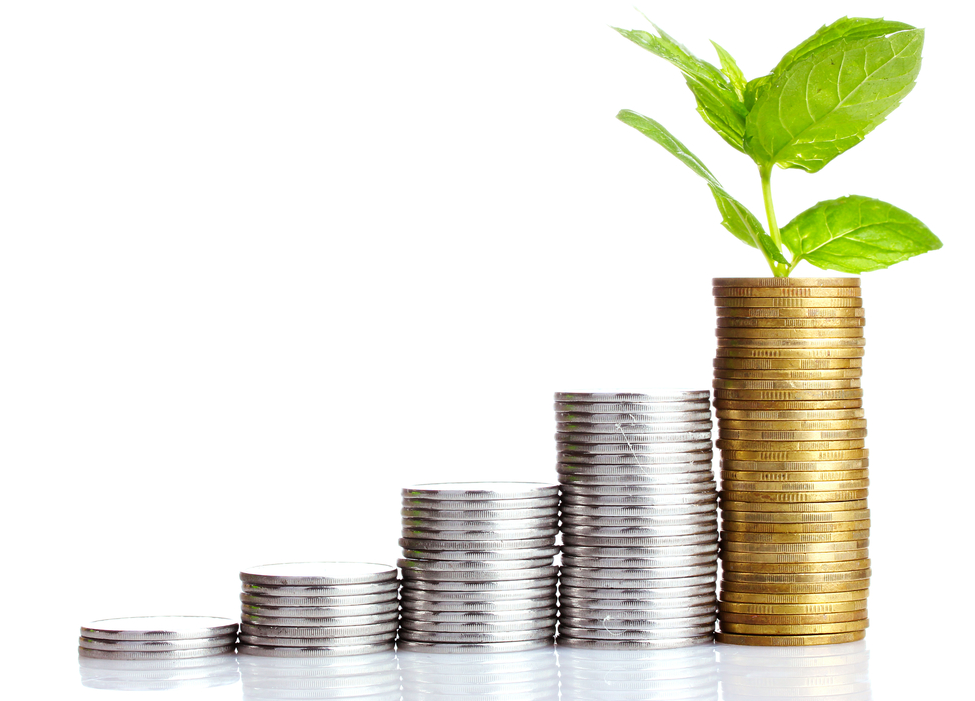
RothIRA – you want one. Allow us to tell you why.
There are tons of stocks and mutual funds and other things to invest in. The type of account we do it from matters. Not only does each transaction carry a possible fee (adding to our costs) but also for the taxes we pay. A regular trading account is taxable. The company that houses the account (Scottrade, eTrade, etc) will report to the IRS the money that you have made in this account. Yup, even here The Man has his hand out. They will also send you a form to include when you file your taxes. In a regular account you will be taxed on any winnings you took for the year.
Few people have heard of a RothIRA and most do not know that it is tax free. This is not a regular account from where we take profits whenever we want. There are rules to follow in order to keep the tax-free status. These rules are not bad at all if the investments we put in there are meant for retirement or for the long term. Basically, whatever your account is worth when you reach retirement age is tax free.
Most people have heard of a 401k – this is a retirement account managed by someone else. When you retire you can withdraw it, pay taxes on it and ride into the sunset with the rest. A RothIRA is similar, except that you manage it yourself and when you reach retirement, your genius investments and all of their profits are all yours – no taxes. This is meant for us regular folks to get a leg up – its an opportunity! Rich people can’t participate and the amount us regular folks can invest is currently limited to $5,500 a year. So if you can save $458 a month, put it in a RothIRA, invest it in dividend-yielding stocks or mutual funds and reinvest those dividends right back (to produce even more dividends, and on and on), you can do very well for yourself.
This is called a “Dripping” which comes from DRIP (Dividend Reinvestment Programs), an investment program that corporations would offer people to buy their stock and conveniently reinvest dividends into more of the same stock without the transaction fees a broker would charge. We can drip by ourselves with whatever dividend-producing stock or mutual fund we choose. Some brokerage accounts allow you to setup a drip automatically free of charge. Think about it, you picked a stock that you will buy more of over time and every once in a while you get more of it for free. Those free stocks will produce more free stock that will produce more free stock! Free! Free! Free!
Dripping in a tax-free RothIRA is a powerful investment strategy. Here is an example: assuming you open a RothIRA account with $5,000 and invest $458 a month in stocks (or mutual funds or whatever you like) that grow 4% annually on average, while yielding a 4% dividend on average along the way for 30 years, you will accumulate over $672,000. Those $458 every month for 30 years is almost $165,000 if all you did was put it in the bank (or stuff it in your mattress). But invested in a RothIRA with a dividend reinvestment strategy can be much more valuable – enough to retire on.
Interestingly enough, there are qualifying life events that can allow you to withdraw before retirement age without paying taxes or penalties. These include, first home purchase and paying your child’s college education. More reasons to open a RothIRA.
Investing in a RothIRA with a dripping strategy is like free money. A Money Rebel likes free money.
Stock Pick: GOOGLE

Money Rebels picks Google as its first stock recommendation. We consider it a long-term play with potential for big profits in the next couple of years.
Google potentially has more personal data on individual people than any other company. In exchange for access to Google’s highly rated, highly functional free apps and services, we volunteer information about us. The personal information is gathered from our use of Google’s apps and services. The purpose of all of this data is to put ads in front of us that we are likely to click on. While we are all used to ads (and largely ignoring them), Google can execute targeted ads relevant to each user and more likely to get a user’s attention. This makes advertising through Google very valuable and also as effective as web advertising could be.Google learns about us through our web searches and browsing preferences when we use their search engine or when we use their browser – both considered the best among their peers. No other company’s name is a verb such a Google, people don’t search for things anymore, they “google it”.
GMail is one of their most popular services and through its use, they are able to “know us better” – they are able to learn more about the topics that interest us including how we shop and travel.In the spirit of free software, Google has provided cell phone hardware manufacturers with a free operating system, Android. To date, the fastest growing mobile operating system. Cell phones are the most used gadgets, by far, for our generation and now anything we do through it adds to their data bank of information on us. These are just the common, most known services they offer in exchange for a peek into our lives. Other services we use from them are reading news through their site, buying media such as books, movies and music from them, using their calendar, social networking site, cloud storage and navigation. They even bought YouTube! How many of use don’t spent time viewing things that interest us on YouTube?
Having one company know so much about us for their personal benefit makes some people paranoid. However, Google launched GoogleNOW which allows all this data to benefit us, too. GoogleNOW enhances the user experience beyond ads we might actually click on and ushers in the next major advancement in personal computing – a concept once referred to as Web 3.0. This phrase was coined by John Markoff of the New York Times in 2006 when he referred to a third generation of Internet-based services that create an ‘intelligent Web’. A sort of artificial intelligence that serve us pro-actively.
This is the future – technology that knows what we need before we need it. Its not a robot butler (yet) but an app on your phone or tablet. It will tell you your local weather, traffic to your common destinations, sports scores to your favorite teams, price updates for stocks that you own, appointments coming up, etc. Here is an example of it’s usefulness – if you have an appointment at 8pm and it is currently 7pm but traffic conditions from your current location to the destination might cause you to be late, it will alert you. Another example – your airline sent you a digital boarding pass and when its time to use it, it’s right there in front of you – no need to dig up the email from weeks before.
Google’s top-notch services compels us to want to use them. They have an ever-expanding user base, better ways to use the data to pitch us relevant ads and all this makes Google the best place for any business to advertise on – allowing them to charge more for their incomparable services. It’s almost a monopoly.
The Internet is not only here to stay, but it is also growing with no end in sight. How people interact with it has become more natural and everyone depends on it in some form. The more Internet use and internet traffic there is, the more valuable advertising becomes. Not only does Google have this game in a headlock but they are able to target select audiences due to all the data they have on over 200 million active Google account holders and over 300 million regular users of their products and services. These numbers will only continue to grow.
Apart from the technologies that affect our daily lives in the present, Google is also involved and many of the technologies that will be affecting our daily lives in the future. For years they have been working on self-driving cars and most recently they have unveiled Google Glasses, a tool for people to interact with the physical world through what’s called “augmented reality”. While self-driving cars might be many years away from a common thing and augmented reality glasses might have not have much interest right now, they are reasons why we should expect Google to not only stick around, but become bigger and more present in our daily lives for decades to come.
We recommend Google at the current purchase stock price. Although, we expect to see a a 30% increase at some point in the next two years, we also like this stock as a long term, dividend-paying, growth stock to accumulate for years to come.
… At Least Make Your Journey Less Stressful

Most of us imagine a life of prosperity. Some of us are making moves to get there. As confident as we may be that we will make it we also need to also be honest with ourselves and accept the fact that we will be working for a good long while before we make it. Our happiness during the majority of this time depends on how much we NEED the job to get by. When someone does not NEED a job there is a different energy about them. On a subconscious level that person navigates life as if on another level. On that same subconscious level, people perceive and treat that person differently. By lightening our financial burdens we can become that person and reap the benefits as well as have peace while we are still working-class.
In my professional experience I have met people who were obviously in good shape with money (high proportion of disposable income or spending power). How can those be obvious in a world where most people lived off of credit cards? The ones truly in good shape carried themselves with less worry and saw the job as a mutually beneficial arrangement rather than submission to a corporate slave master.
People that could not survive without a paycheck lived in fear, a fear that could be sensed. They are highly cautious, show stress and are generally overly concerned with pleasing the person sitting one rung higher on the ladder. These same people seem to be the ones that work the most overtime, receive the most pressure from their managers and are always in the hot seat. However, this energy they carry with them seems to attract the heat. I have even experienced offices where heads of households with children seem to have it the worst. The more they NEED the job, the more the job abuses them.
On the other hand, the ones in good shape don’t see their job as their master. They don’t complain as much because their job is optional as far as their immediate short term life is concerned. They get along better with their managers. It’s almost as if this energy about them gets them more respect. It is understood that they they don’t NEED the job. Generally, they are subconsciously accepted as a higher class than their peers by everyone in that environment.
We should be motivated to elevate our financial condition in order to live with less stress and less hatred toward having to be employed. Let’s adjust our finances and reduce our debt. The less we need the next paycheck to cover our expenses the less stress we feel overall and this allows an easier life as we continue to work towards our ultimate goal of complete financial independence.
Controlling Our Finances, Controlling Our Future

Nothing holds us back like bills. We can easily see our money committed to expenses before we even earn it. Many times we do it to ourselves. The system we live in facilitates debt. This was a major reason for the Great Recession but unfortunately many of us have not yet learned that debt can enslave us and if not used with care can keep us enslaved and prevent us from becoming financially independent.
Credit cards and loans can easily become a large part of our monthly expenses and since so much of our money goes to pay these debts we have less money left over (if anything at all) to put towards constructive things for our future and financial well-being. One thing many do not consider is that interest is being added to this debt which automatically makes things more expensive that what we would be willing to pay if we were using cash!
So what can we do? For starters, we need to have pride in ourselves and that pride says we will buy our OWN things and pay our OWN way. Lets keep in mind that when we use loans and credit cards, we are using someone else’s money. If we want to be financially independent, lets start thinking that way. At the same time, we will not be spending on anything we do not truly need. The main goal is to bring our expenses down as low as possible and eliminate unnecessary bills and debt so that we keep as much of our income as possible. We need to be strong enough to sacrifice some comforts and conveniences. Do we want financial independence bad enough to make the necessary moves? If we do, then we have the right mentality. The Money Rebel has come up with some basic ways we can start liberating ourselves financially.
Make a list of all of our bills
Ask what is essential and what is optional. In other words, what are our needs and what are our wants. Some we can do little about – such as housing, food, healthcare, etc. Others we create for ourselves.
What can we eliminate immediately?
There are things we pay for and do not need. From services to subscriptions, most of us can find little things that separates us from our money. Lets be cold and heartless when we turn our backs on them because we do not need them – we need our money.
What can we replace with lower cost versions?
There are things we need but might be able to pay less for. Can we pay cheaper rent down the street? Can we give up the lease and buy an inexpensive car outright? Is there a better insurance rate for our car or home? Cheaper gym membership? Lower cell phone plan? How much TV do we watch – do we really need that cable bill? Are we buying a new shirt because we absolutely need it or are we just bored with our current selection? Question every expense and every purchase! We allow many expenses because they are so small – but they add up. Even if they total up to a hundred dollars in one month it is worth considering. How many hours would I have to work to make up that same amount?
After eliminating everything we can, lets use our left over money to pay off credit cards!
We have a sense of security when we have cash. However, if we have a similar amount in credit card debt, we don’t really have anything! We need to understand that we are in a better financial condition by having little cash and little credit card debt than having more cash and more credit card debt. We are going to have to face this debt at some point. The longer we put it off, the more it is going to cost us. We tend to prefer to keep the cash in our pocket and put off the debt by paying the minimum. We also tend to forget that if we use the cash to pay the credit card, we keep the same buying power (via the credit card) while eliminating the interest-rate. Remember, the card will always be available for emergencies!
When we start paying down our debt, the related bills start to go away and we will feel better about ourselves. There will come a time where the money we were using to pay down our debt now has nowhere to go but our pockets! Now we can start thinking about saving money. We also open ourselves up to opportunities such as investments and a realistic path to owning our own businesses or owning our own homes – Wouldn’t it be great to eliminate THAT bill?!
Where we are in 5, 10, 15 or 20 years depends on what we do right now. Lets create a better financial future. Let’s start by eliminating our excess bills, reducing how much we spend on the ones we need to keep, and paying off our debt. These are the things that hold us back – so why allow it? Lets rebel!
Considering Value and Risk in My First Real Estate Purchase

I am generally conservative when it comes to risk. I enjoy the satisfaction of knowing the odds are in my favor. Some would say “small risk, small reward” but I like to look at it as “small risk, sure reward”. What’s “small” about the risks I take (or would take) is not necessarily the amount of money involved. Rather, it’s taking into account the different possible outcomes and measuring the likelihood of success. Also, I look at the worst case scenario (no matter how low its odds) and consider if the attempt would still be worth it if this were the outcome.
When I was 23, I bought an apartment. This was before the Great Recession and in the middle of the real estate bubble. Mortgages were easy to get, even for a young kid with a $42k salary. I had a lot of options. I wanted to hold onto something and sell it for a nice profit two or three years later. However, the main factor behind my decision was the ongoing cost of owning this place and what I got for the money – I decided on value.
I settled on borrowing the least amount possible for an apartment in an area generally considered “undervalued”. No neighborhood this close to Manhattan and surround by public transportation sold for this cheap. Between mortgage and maintenance/utilities, this apartment would cost the same as rent! Public and private money was confirmed to be invested into this area and that added to its great investment potential. If the worst happened and I couldn’t make my payments or if the apartment’s price didn’t go up with time – I would be OK. If I had to rent it out and move back in with my parents, it would pay for itself.
The worst case scenario did happen with the Great Recession. Real estate values dropped across the USA, and NYC was hit hard. While prices in some areas of NYC dropped as much as 30%, my apartment maintained its price because it was already undervalued before the real estate bubble burst. It was a victory given the circumstances because other places I considered would have been “under water” – where mortgage amounts are higher than a property’s worth. I could have borrowed three times as much money and invested in a higher priced property but that would have been my ruin.
Today, with the modest recovery in the economy and housing sector and with banks refusing to lend money, less people are able to buy into high-priced properties. Many people that can buy into high-priced properties have since learned to be more conservative. Lower-priced properties like mine are more desirable than before and I am actually receiving higher offers than I thought possible in this economy. People have learned to appreciate value in NYC real estate. Rents have also risen in this neighborhood because more people are renting than before. The tough economy caused more people to move to NYC for work. A lot of previous home owners are now renters, too. If I chose to rent my apartment I could make a little money from it.
This was my biggest lesson learned about value and risk. I made the right decision by considering the potential reward along with the worst case scenario. I decided the worst case scenario was acceptable, even though the possible reward was far less than other riskier options, the risker options would have ruined me. I stood to make less money but also limited my risk while being satisfied with the ongoing costs of ownership.
Money Rebels!
I am a Money Rebel. I hate money because it controls our lives. It dictates our quality of life, our options, the clothes we wear, the food we eat, where we live, who we interact with and everything in between. The only way to take over control of our lives is to make money work for us – to control that which otherwise controls us.
I’m not there yet, but I will be.
I have created this blog to tell the story of my journey to financial independence and share my progress along the way. I will share my advice, opinions, lessons learned, actions taken, successes and failures.
As time passes I will prove myself successful and establish a track record. My vision is to then launch Money Rebels as an investment company to help others rebels successfully gain control of their lives as well.
But here is where I start – with this blog. Stay tuned.
A journey of a thousand miles begins with a single step. ~ Lao Tzu
 Money Rebels